



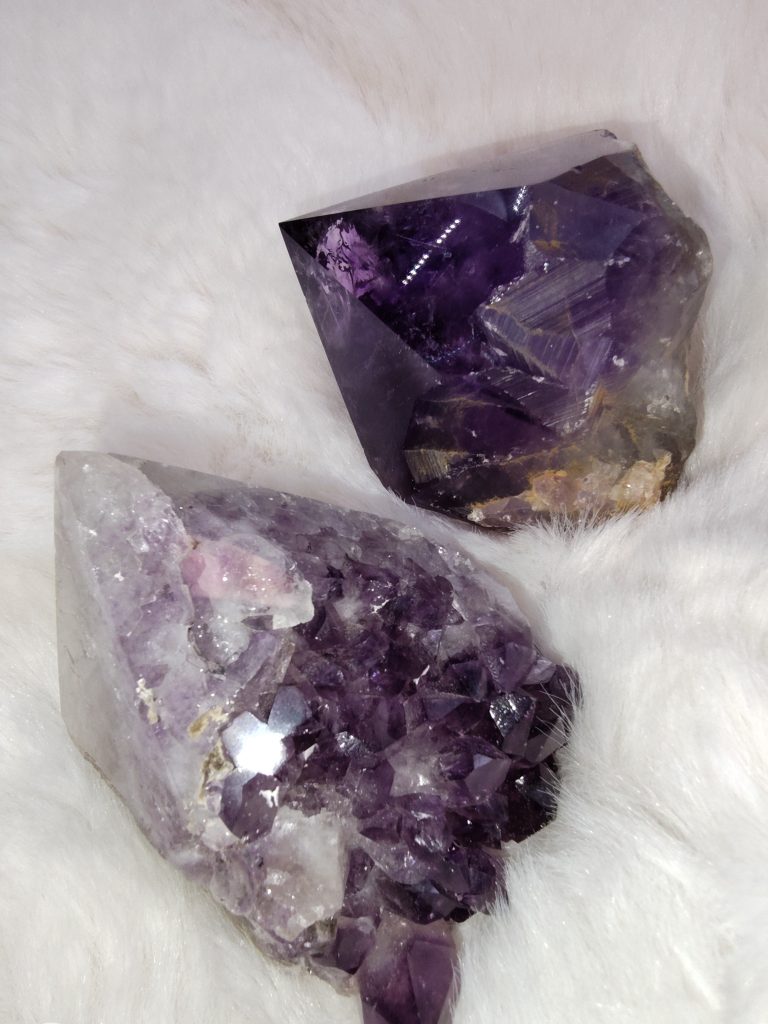
7 Captivating Secrets of Amethyst: The Ultimate Stone of Peace and Clarity
Amethyst is a stunning variety of quartz cherished for its beautiful purple hues, which can range from light lavender to deep violet. These captivating gemstones are often associated with tranquility and balance, making them popular choices for both jewelry and decorative pieces.
Amethyst is believed to possess calming properties, promoting emotional stability and clarity of thought. Many people use these crystals in meditation practices, as they are thought to enhance spiritual awareness and intuition. The unique formation of amethyst, which occurs in geodes, adds to its allure, as the crystals can grow in intricate patterns and sizes, making each piece truly one-of-a-kind.
Table of Contents
-
The Science of Purple: Amethyst Composition
-
Historical Legend: From Ancient Greece to Royalty
-
Metaphysical Healing and Spiritual Benefits
-
Amethyst in Jewelry and Essential Care
-
How to Identify Natural vs. Synthetic Amethyst
-
Global Mining: Where Amethyst is Found
The Science of Purple: Amethyst Composition
Amethyst is a variety of macro-crystalline quartz ($SiO_2$). Its purple color is not caused by a single pigment but by a combination of iron impurities, trace elements, and natural irradiation within the earth.
Unlike other stones where color is uniform, Amethyst often exhibits color zoning—angular regions of darker and lighter color. On the Mohs scale of hardness, Amethyst ranks at a 7, making it durable enough for everyday wear but still susceptible to scratching from harder stones like Topaz or Diamonds.
Historical Legend: From Ancient Greece to Royalty
The name “Amethyst” comes from the Greek word amethystos, meaning “not intoxicated.” Ancient Greeks believed the stone could prevent drunkenness, leading them to carve wine goblets from it.
Throughout history, it has been a staple of power:
-
The Middle Ages: It was a symbol of royalty and was used extensively in the British Crown Jewels.
-
Religious Significance: Often called the “Bishop’s Stone,” it is still worn by Catholic bishops in rings to symbolize spiritual celibacy and piety.
-
Ancient Egypt: Used in heart-shaped amulets for protection and as decorative beads in elaborate collars.
Metaphysical Healing and Spiritual Benefits
In the world of holistic wellness, Amethyst is regarded as one of the most powerful “all-purpose” crystals. It is primarily linked to the Crown Chakra, acting as a bridge between the physical and spiritual realms.
Key Benefits Include:
-
Stress Relief: Known as “Nature’s Tranquilizer,” it is used to soothe irritability and balance mood swings.
-
Insomnia Aid: Placing a geode or tumbled stone near the bed is thought to encourage restful sleep and vivid, insightful dreams.
-
Cognitive Clarity: It helps the mind stay focused, making it a favorite for those in creative or high-stress professions.
Amethyst in Jewelry and Essential Care
Because of its availability and striking color, Amethyst is a staple in modern jewelry design. However, maintaining its brilliance requires specific care.
| Feature | Description |
| Best Jewelry Settings | Ideal for rings, necklaces, and bracelets due to its hardness. |
| Light Sensitivity | Prolonged exposure to direct sunlight can cause the purple color to fade. |
| Cleaning Method | Use lukewarm soapy water. Avoid steam cleaners which can crack the stone. |
| Common Shapes | Often faceted into “Brilliant” cuts or kept as raw “Druzy” in geodes. |
How to Identify Natural vs. Synthetic Amethyst
With high-quality lab-grown quartz entering the market, it can be difficult to tell a natural stone from a synthetic one without professional equipment.
-
Color Zoning: If you look through the side of a natural amethyst, you should see slight variations in color (stripes or zones). If the color is perfectly uniform throughout, it may be synthetic.
-
Inclusions: Natural Amethyst often has “tiger stripe” inclusions or tiny liquid bubbles. A “flawless” stone at a very low price is a red flag.
-
The Cold Test: Like other natural stones, genuine quartz feels significantly cooler to the touch than glass or plastic imitations.
Global Mining: Where Amethyst is Found
Amethyst is found in abundance across the globe, though the quality varies significantly by region.
-
Brazil: Known for producing massive geodes, some large enough for a person to stand inside.
-
Uruguay: Famous for deep, “grape-jelly” purple crystals with high clarity and smaller, more intense points.
-
Zambia: A leading producer of smaller, highly saturated stones that often feature reddish-purple undertones.
-
Arizona (USA): The Four Peaks mine produces a unique shade of Amethyst highly prized by North American collectors.
Amethyst remains a timeless treasure, blending the raw beauty of geology with thousands of years of human folklore. Whether used for its healing energy or its regal aesthetic, it is a centerpiece of any gem collection stop by the crystal communitea shop in centennial colorado .